How to Cut and Score Cardstock for Clean Folds
Choose the right paper weight, find the grain, cut square with a trimmer, knife or scissors, and score with a bone folder so cards and boxes fold crisply without cracking.
Project at a glance
Materials
- Cardstock, light (about 65 lb) or heavy (80 to 110 lb)
- Paper trimmer or sharp scissors
- Craft knife, metal ruler and self-healing cutting mat
- Bone folder or empty ballpoint pen
- Sharp pencil and eraser
- Scrap card for a guide
A card that cracks along its spine or a favor box that leans to one side usually went wrong before any glue came out. The sheet was cut slightly off square, or it was folded without a groove to guide the fold.
Once you know how to score cardstock and cut it accurately, tent cards stand straight, box lids close and a batch of fifty pieces looks like one set. Both skills take a few minutes to learn and need only simple tools.
Paper weights in plain terms
Paper sold for crafts falls into three rough groups, and cardstock is simply the thicker, stiffer end of the range.
- Text-weight paper is ordinary writing and printer paper. It folds without scoring and suits envelope liners, cones and wrapped bags.
- Light cardstock, about 65 lb, bends easily and cuts with scissors. Use it for tags, layered panels, punched shapes and small boxes.
- Heavy cardstock, about 80 to 110 lb, stands up on its own. Use it for card bases, tent cards and table numbers. It must be scored before folding.
If you are still gathering tools, the wedding craft supplies starter kit lists what each one is for.
Find the grain before you fold
The fibers in a sheet mostly run in one direction, called the grain. A fold made along the grain is smooth. A fold made across it is more likely to crack, especially in heavy or dark cardstock.
The bend test takes a few seconds. Hold the sheet loosely and curve it one way, then turn it a quarter turn and curve it the other way, without creasing. The direction that bends with less resistance is the grain. Plan your main fold to run that way when the layout allows.
Measure from one true edge
Factory edges are usually straight, so choose one long edge and one short edge as your reference and measure everything from those two. Measuring from a freshly cut edge passes any small error on to the next piece.
Mark each measurement twice, near the top and near the bottom of the sheet, with a sharp pencil and a light touch. Join the two marks with the ruler. A single mark lets the ruler pivot.
Three ways to cut
Paper trimmer
This is the fastest and most consistent method for straight cuts. Push the sheet firmly against the top guide, hold it flat with your spread hand, and cut in one steady motion. Cut one or two sheets at a time: a thick stack shifts.
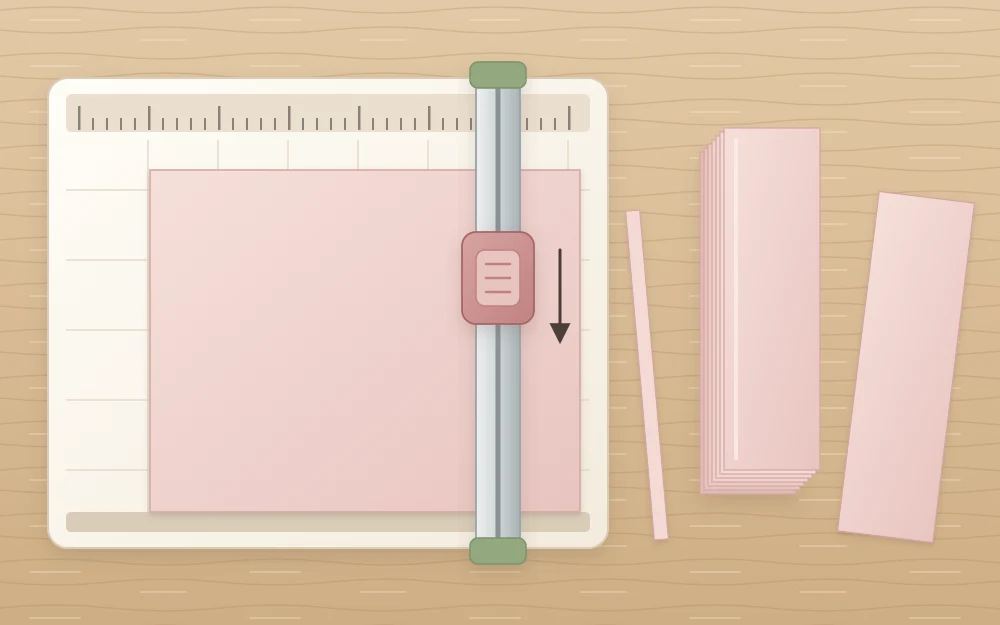
Craft knife, metal ruler and cutting mat
For long cuts, slots and windows, lay the sheet on a self-healing cutting mat and hold a metal ruler along the pencil line, with the part you are keeping under the ruler. Draw the blade toward you in several light passes. Pressing hard makes the blade wander and tears the fibers.
Safety note
Keep the fingers of your holding hand on top of the ruler and behind the blade’s path, never past its edge. Change the blade when it starts to drag, and cap or retract it every time you put the knife down.
Scissors along a pencil line
Scissors are fine for light cardstock and for curves. Use long strokes, close the blades only about two thirds of the way, and turn the paper instead of the scissors on curves.
Score, then fold
To score is to press a groove into the sheet without cutting it. The groove compresses the fibers so the sheet folds exactly there.
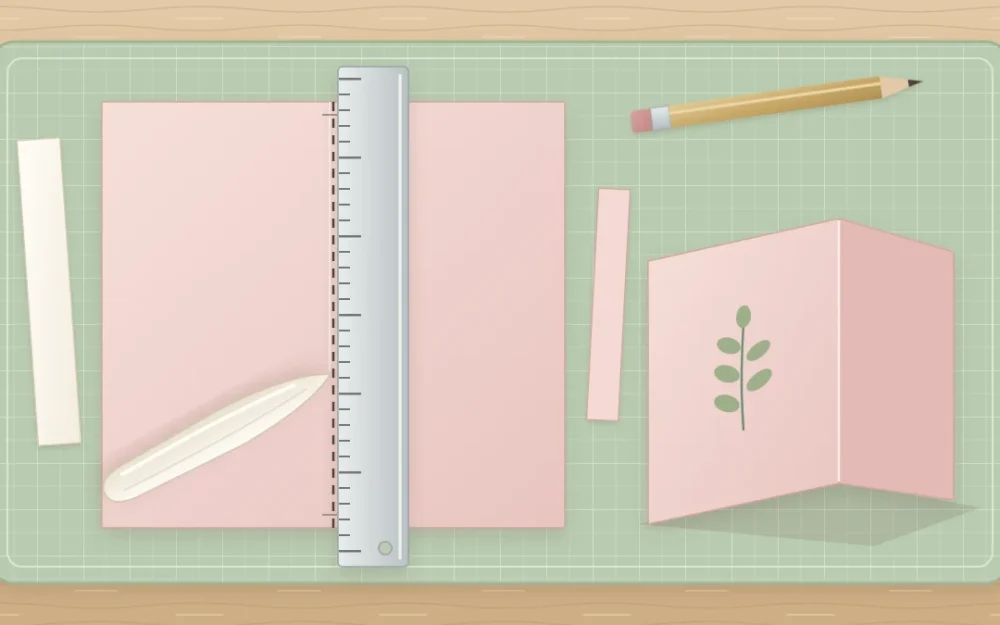
- Mark the fold line with two small pencil ticks, one at each edge.
- Place the sheet on a cutting mat or a pad of scrap paper, which gives slightly under the tool.
- Line a metal ruler up with the ticks and hold it down firmly.
- Draw the pointed end of a bone folder along the ruler’s edge with firm, even pressure. An empty ballpoint pen works too. One pass is enough for light cardstock and two for heavy.
- Turn the sheet over. You will see a raised ridge on the back of the line.
- Fold so that the ridge ends up on the inside of the fold and the groove on the outside.
- Burnish the crease by running the flat side of the bone folder along it once or twice. Lay a scrap of paper on top first to avoid shiny marks.
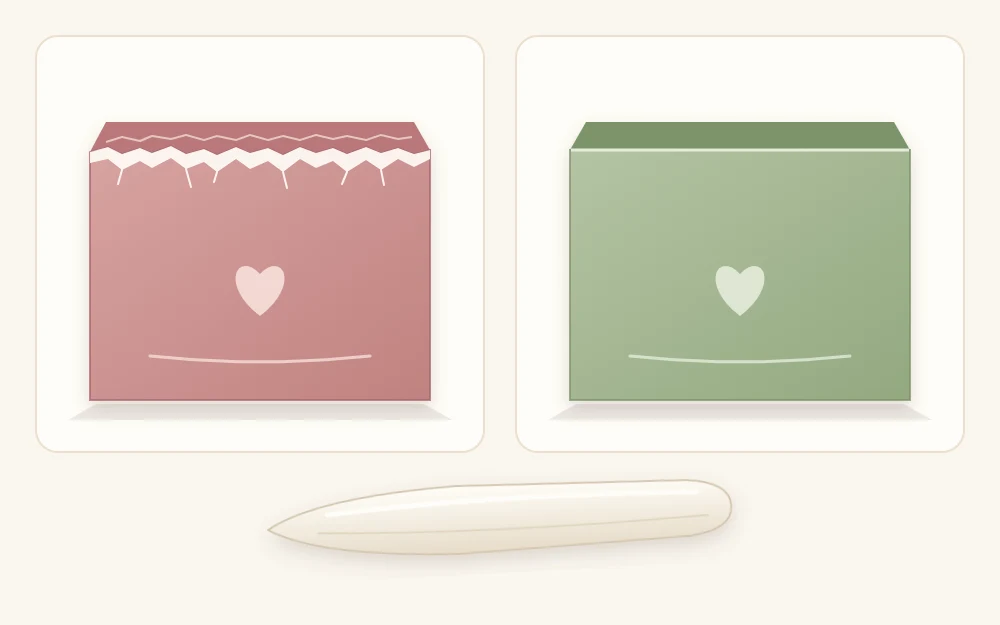
If a dark sheet still shows a pale crack, the fold is probably running across the grain. Turn the layout a quarter turn on the next sheet.
Cutting many identical pieces
Batches go faster, and match better, when you repeat one action at a time.
- Strips first. Cut every sheet into strips of the finished height. A letter-size sheet, 8 1/2 x 11 in (21.6 x 27.9 cm), gives two strips 4 in (10 cm) wide with a narrow offcut.
- Then cross-cut. Cut each strip into pieces of the finished width. Each 11 in strip gives three pieces 3 1/2 in (9 cm) wide, so one sheet makes six pieces of 3 1/2 x 4 in. That is the size used for handmade tent place cards.
- Use a stop or a guide card. Tape a scrap of thick card to the trimmer bed at the right distance and push each strip against it, or cut one perfect piece and use it to mark all the others. Measure once, not fifty times.
- Score in one session. Set the ruler position once and score every piece before you fold any.
To work out how many sheets to get, divide your count by the pieces per sheet, round up, and add about one sheet in ten for spares. For 80 cards at six per sheet, that is 14 sheets plus two spare.
Tip
Cut one test piece from plain paper and fold it before you cut good cardstock. A mistake in the measurements shows up at once, and costs nothing.
Rounding corners and storing sheets
Rounded corners soften a card and hide slightly uneven cuts. A corner punch is the quickest way. Without one, draw around a small coin at each corner and trim with scissors.
Store cardstock flat, in its packaging or between two pieces of cardboard, somewhere dry and out of sunlight.
The same steps carry straight into projects: a scored base is the start of handmade wedding cards, and curved and straight score lines shape favor boxes made from cardstock.
Frequently asked questions
Why does my cardstock crack when I fold it?
Either the sheet was folded without a score line, or the fold runs across the grain. Press a groove along the fold with a bone folder first, fold with the raised ridge on the inside, and where the layout allows, turn the piece so the fold follows the direction in which the sheet bends most easily.
Can I score cardstock without a bone folder?
Yes. Any smooth, blunt point will press a groove: an empty ballpoint pen, the back of a butter knife or a large blunt embroidery needle. Work against a metal ruler on a slightly soft surface such as a cutting mat, and avoid anything sharp enough to cut the surface fibers.
Which side of the score line goes on the outside of the fold?
The grooved side goes on the outside and the raised ridge goes on the inside. It can feel backwards at first, but folding this way lets the compressed fibers tuck into the fold, while folding the other way stretches the surface and makes cracking more likely.