Floral Hoop Wreath: A Simple Handmade Wedding Decoration
Build a flower hoop on a 10 to 14 in ring: plan the layout, wire on a greenery base in one direction, add focal flowers and trailing ribbons, and hang it safely.
Project at a glance
Materials
- Metal or wooden hoop, 10 to 14 in across
- Thin floral wire or floral tape
- Wire cutters and floral snips
- Greenery sprigs (fresh, dried or faux)
- 3 or 5 focal flowers plus filler flowers
- About 3 to 4 yd of ribbon for hanging and tails
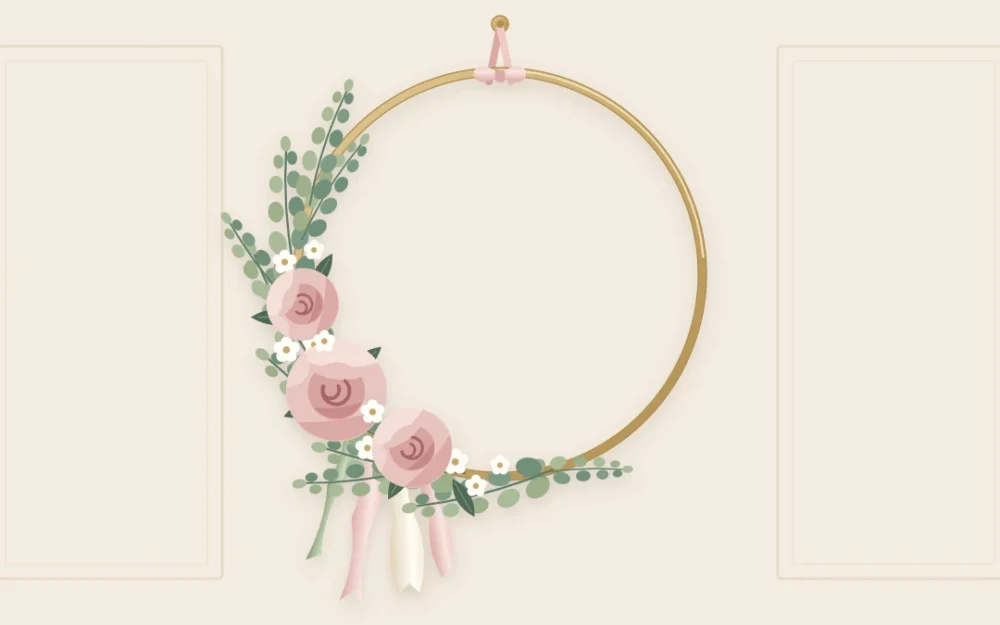
A floral hoop wreath is a plain ring with flowers and greenery covering only part of its rim. The bare section is the point: it keeps the piece light and modern, and it means you need far fewer stems than a full wreath would take.
The construction is simple enough for a first flower project. You bind small sprigs to the hoop one after another, all facing the same way, so each one hides the binding of the one before.
What You Need
- A metal or wooden hoop, 10 to 14 in (25 to 36 cm) across. The inner ring of an embroidery hoop works well.
- Thin floral wire on a spool, or floral tape
- Wire cutters and floral snips
- Greenery: eucalyptus, ruscus, olive or fern, fresh, dried or faux
- Three or five focal flowers and a few stems of filler flowers
- Ribbon for hanging and for trailing tails
- Optional: narrow ribbon to wrap the hoop, and tacky glue
Plan the Layout
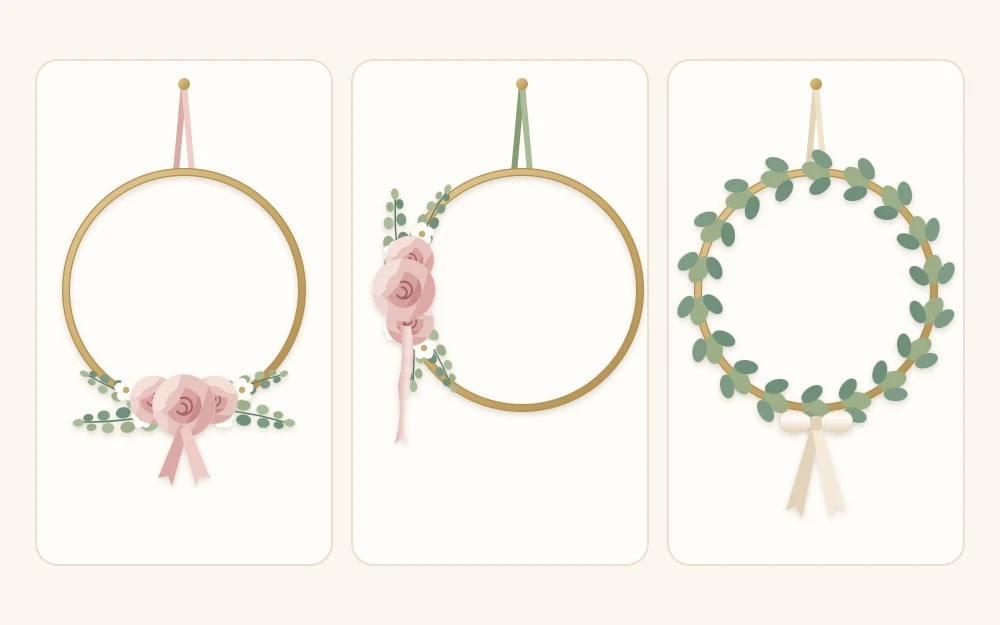
Decide how much of the rim to cover: between one third and one half looks balanced. On a 12 in (30 cm) hoop the rim is about 38 in (96 cm) long, so a third is roughly 12 to 13 in (30 to 33 cm) and a half is about 19 in (48 cm).
Mark the start and end of the decorated section with two small pieces of tape. Then choose a position:
- Bottom: flowers centered at the lowest point, the classic choice for hanging.
- One side: flowers running down the left or right, with the fullest part slightly below the middle.
- Slim full ring: a thin line of greenery all the way around, with flowers gathered in one spot.
Wrap the Hoop or Leave It Bare
A gold or brass-colored metal hoop looks good bare. A plain wooden hoop or a dull wire ring is improved by a ribbon wrap.
To wrap, fix the end of a narrow ribbon to the hoop with a dot of tacky glue and wind it around the rim at a slight angle, overlapping by about half its width. Glue the end down where the flowers will cover it. A 12 in hoop takes roughly 3 yd (2.7 m) of 5/8 in (1.5 cm) ribbon; a thick wooden hoop takes more, so wrap a short section first and measure what it used.
Build the Greenery Base
- Cut sprigs. Snip the greenery into pieces about 4 to 5 in (10 to 13 cm) long, with the lowest 1 in (2.5 cm) of each stem stripped bare.
- Attach the first sprig. Lay it along the rim at one tape mark with its tip pointing away from the section you will cover. Wind wire tightly around the bare stem and the hoop three or four times. Do not cut the wire.
- Overlap the next. Place the second sprig so its leaves cover the wired stem of the first, about 2 in (5 cm) further along. Wire it on with the same continuous length.
- Keep going in one direction until you reach the second tape mark. Angle some sprigs slightly outward and some inward so the line is not too flat.
- Finish the end. Tuck one last sprig in facing the opposite way to cover the final binding. Cut the wire, twist the end around the hoop and press it flat against the back.
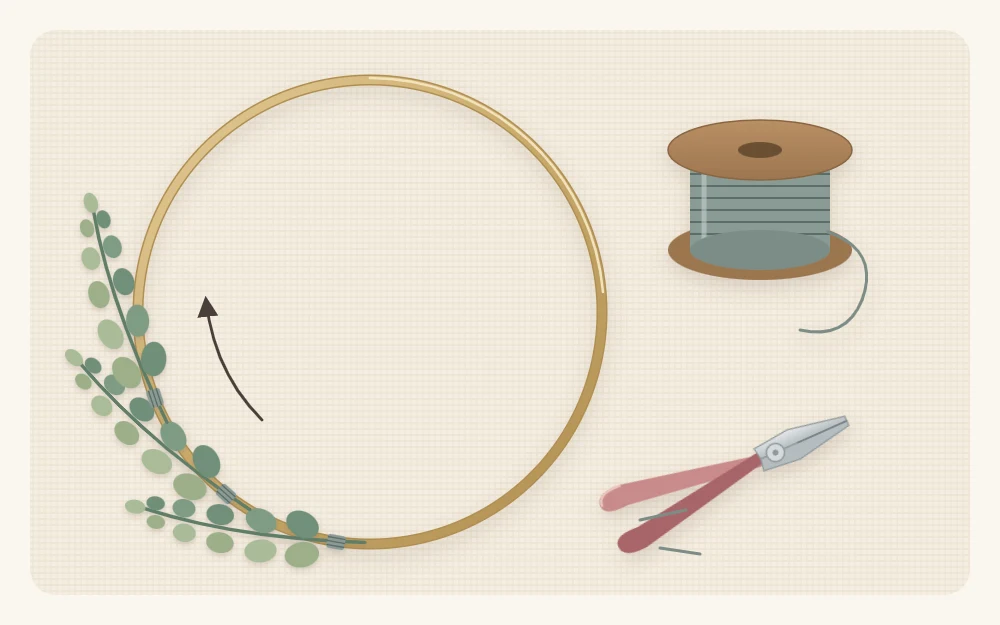
With sprigs spaced about 2 in apart, a 12 in section needs around six or seven pieces and a 19 in section around ten. Cut a few extra for filling gaps.
Floral tape can replace wire on a thin metal hoop: stretch it as you wrap so it clings. Wire holds better on thick or woody stems.
Add Flowers, Filler and Ribbons
Trim the focal flower stems to about 2 in. Place the largest bloom slightly off-center in the greenery and wire or tape its stem to the hoop, hiding the binding under a leaf. Set the remaining flowers on either side, spaced unevenly and turned at slightly different angles.
Fill the gaps with short sprigs of filler flowers, pushing their stems under the existing wire where you can. Then hold the hoop at arm’s length and turn it around: bare wire visible from the front needs one more leaf over it.
For trailing ribbons, cut three or four lengths of about 1 yd (90 cm) each. Fold each in half and attach it to the hoop below the flowers with a lark’s head knot, so two tails hang from every ribbon. Trim the tails at different lengths.
Tip
Faux flowers often have thick plastic stems. Cut them with wire cutters, not scissors, and bind them with wire, which grips plastic better than tape does.
Fresh, Dried or Faux: When to Make It
Faux and dried materials can be assembled weeks or months ahead. Store the hoop flat in a shallow box, flowers facing up, away from sunlight and damp. Dried stems shed and snap easily, so pack tissue loosely around them.
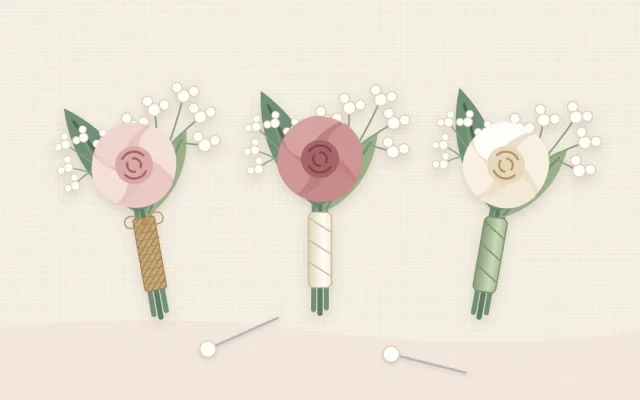
Fresh greenery is best made the day before. Mist it lightly with water, lay the hoop flat on a damp towel and keep it somewhere cool. Add fresh flowers as late as you can, since they have no water source on the hoop, and choose the same sturdy blooms you would use to make a boutonniere.
Dried leaves, seed heads and grasses in rust and gold tones turn the same hoop into one of the easiest fall wedding crafts.
Ways to Use a Flower Hoop
- Behind the head table: one large hoop or a group of three in different sizes.
- Aisle markers: small hoops tied to the end chairs with ribbon.
- On a sign: tied to the corner of an easel beside a hand-lettered welcome sign.
- Centerpiece ring: a fully covered slim hoop laid flat on the table around a jar or a group of LED candles.
- Carried: held by an attendant in place of a bouquet.
Hanging It Safely
Tie a ribbon loop to the top of the hoop with a firm double knot, and check that the hoop hangs level; if it tips, slide the loop a little toward the heavier side.
Safety note
Keep a hanging hoop light, and hang it by its ribbon from a removable hook or from a stand or frame meant for decorations. Ask the venue what may be attached to walls and ceilings before you plan where it goes, and never hang it above a real flame.
Frequently asked questions
What size hoop should I use?
A hoop of 10 to 14 inches across suits most uses and is easy to handle. Smaller hoops of 6 to 8 inches work as chair or aisle markers, while larger rings make a statement behind a table but need more greenery and a sturdier place to hang. Start with a 12 inch hoop.
Can I use real flowers on a hoop?
Yes, but they have no water on the hoop, so choose sturdy blooms and add them as late as possible, ideally the day before or the same morning. Mist the greenery and keep the hoop cool. For anything made further ahead, dried or faux flowers are the dependable choice.
How do I stop the flowers from sliding around the hoop?
Smooth metal gives wire little to grip. Wrap the section you plan to decorate with floral tape or ribbon first, then wire the sprigs over that layer. Pull each turn of wire tight and use one continuous length, so every sprig is locked in by the next.